
Background
The Climate Pollution Reduction Grant (CPRG) is a US Environmental Protection Agency (EPA) program funded through the Inflation Reduction Act (IRA). The program aims to develop regional short- and long-term climate plans with a goal of addressing climate change and reducing greenhouse gas (GHG) emissions. A total of $5 billion is allocated for this program, and $250 million is allocated to eligible entities as planning grants. A total of $1 million will be allocated to the Worcester, MA-CT Metro Area and the 66 other most populous metropolitan areas in the United States. It is a 4-year planning grant to develop a Priority Climate Action Plan (PCAP), Comprehensive Climate Action Plan (CCAP), and a Status Report that is due at the end. The Central Massachusetts Regional Planning Commission (CMRPC) is the lead organization.
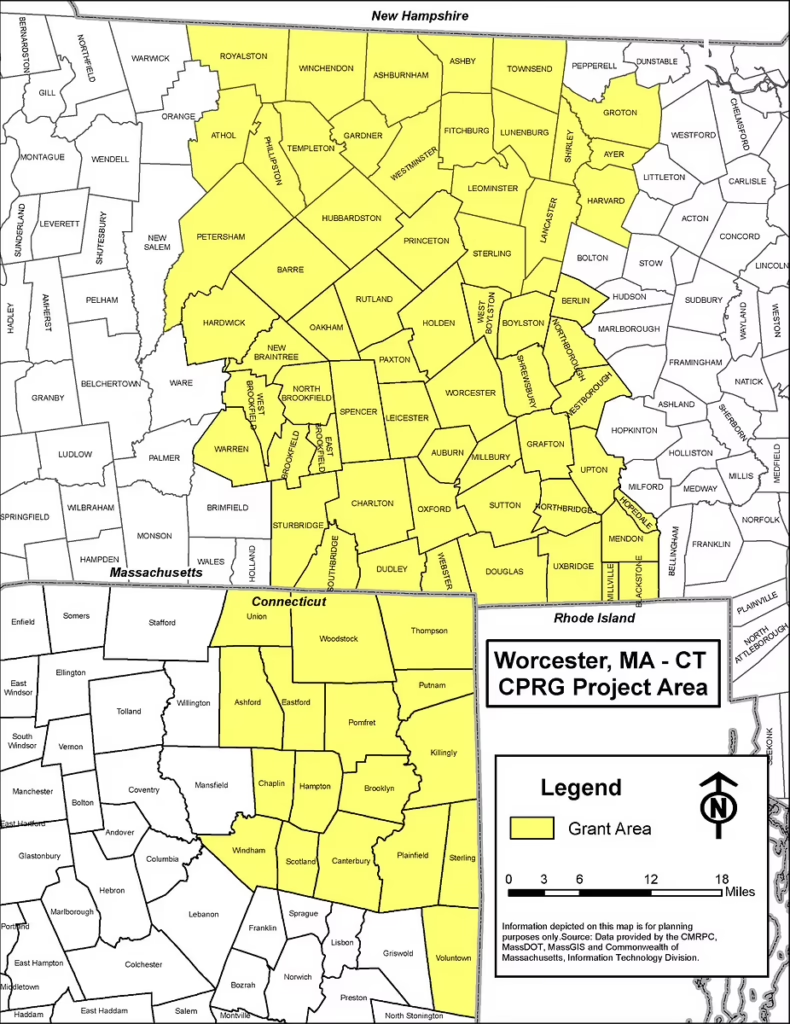
Goals
- Benefits-cost analysis of actions that will help reduce climate pollution throughout Central Massachusetts and Northeastern Connecticut.
- Engage with Environmental Justice (EJ) communities to ensure that historically overburdened communities have access to climate investment funds. CMRPC will provide targeted outreach to EJ communities through in-person forums, surveys (online & paper), and input through a committee.
- Utilize Bipartisan Infrastructure Law (BIL) and Inflation Reduction Act (IRA) funds by comprehensively exploring all climate actions to reduce climate pollution.
The Planning Process
- CMRPC staff are leading the planning process and grant administration.
- CMRPC staff plan to work closely with the sub-grantees:
- Montachusett Regional Planning Commission (MRPC)
- Northeastern Connecticut Council of Governments (NECCOG)
- Sub-grant awards will be used to work with partners to:
- Conduct community engagement in non-CMRPC areas.
- Provide GHG emissions analysis and modeling for the full grant area.
- Establish a Committee to help oversee the overall planning process.
- CMRPC staff will be providing project updates to all communities through social media/project website.
- CMRPC will work with subcontractor Weston & Sampson to inform the planning process through analysis and modeling and develop an interactive emissions toolkit.
Three Workplan Deliverables
Greater Worcester Priority Climate Action Plan (PCAP)
The Priority Climate Action Plan (PCAP) is the first key plan and focuses on short-term, implementable projects that can reduce GHG emissions. The plan integrates five key emissions sectors: Transportation, Electricity, Commercial and Residential Buildings, Waste and Materials Management, and Agricultural/Working Lands.
Greater Worcester Comprehensive Climate Action Plan (CCAP)
The Comprehensive Climate Action Plan (CCAP) is the second key plan, which focuses on long-term policies, strategies, and goals that municipalities can implement to further reduce GHG emissions. Similar to the PCAP, this plan integrates the following six key emissions sectors: Transportation, Electricity, Commercial and Residential Buildings, Waste and Materials Management, Industry, and Agricultural/Working Lands.
Status Report
The third plan is due at the end of the 4-year grant period and must include an implementation status of quantified GHG reduction measures, any relevant updated GHG analyses or projections, and next steps and future budget/staffing needs.
Due by Summer 2027
Planning Sectors & Strategies
Emission Reductions
Reductions will be targeted in the following sectors: transportation, electricity, commercial and residential buildings, agriculture/natural and working lands, waste and materials management, and industry.
Transportation Strategies
Transportation strategies include: protected bike lanes & shared use paths, electrify senior vans, purchase EV/PHEV & expand ridesharing, expand fare-free transit, electrify public transit, and implement bike sharing.
Electricity Strategies
The electricity strategies include: install solar canopies/solar arrays on existing infrastructure, incentives to establish solar arrays over existing brownfields, capped landfills, and/or closed fuel facilities, and install battery storage systems
Commercial & Residential Buildings Strategies
The commercial and residential building strategies include: weatherization retrofits, particularly through replacing inefficient windows; creating free & accessible services for navigating residential energy efficiency incentives and rebates; and replace existing municipal/school HVAC with efficient electric heat pumps
Agricultural, Natural, and Working Lands Strategies
Agricultural, natural, and working lands strategies include: tree/shrub maintenance & planting program, permanent protection of forestland, assist young farmers with local land/food production purchasing, and create green roof rebate program.
Waste and Materials Management Strategies
Waste strategies include: composting programs & Regional Waste Management Entity, new anerobic Infrastructure/partnerships to guarantee steady supply of organics for new digestors, and restrict use of plastic.
Contact
Lead Agency: Central Massachusetts Regional Planning Commission (CMRPC)
Trish Settles, Deputy Executive Director, tsettles@cmrpc.org
Partner Agency: Montachusett Regional Planning Commission (MRPC)
Karen Chapman, Planning & Development Director, kchapman@mrpc.org
Partner Agency: Northeastern Connecticut Council of Governments (NECCOG)
Jim Larkin, Director of Regional Planning, jim.larkin@neccog.org
